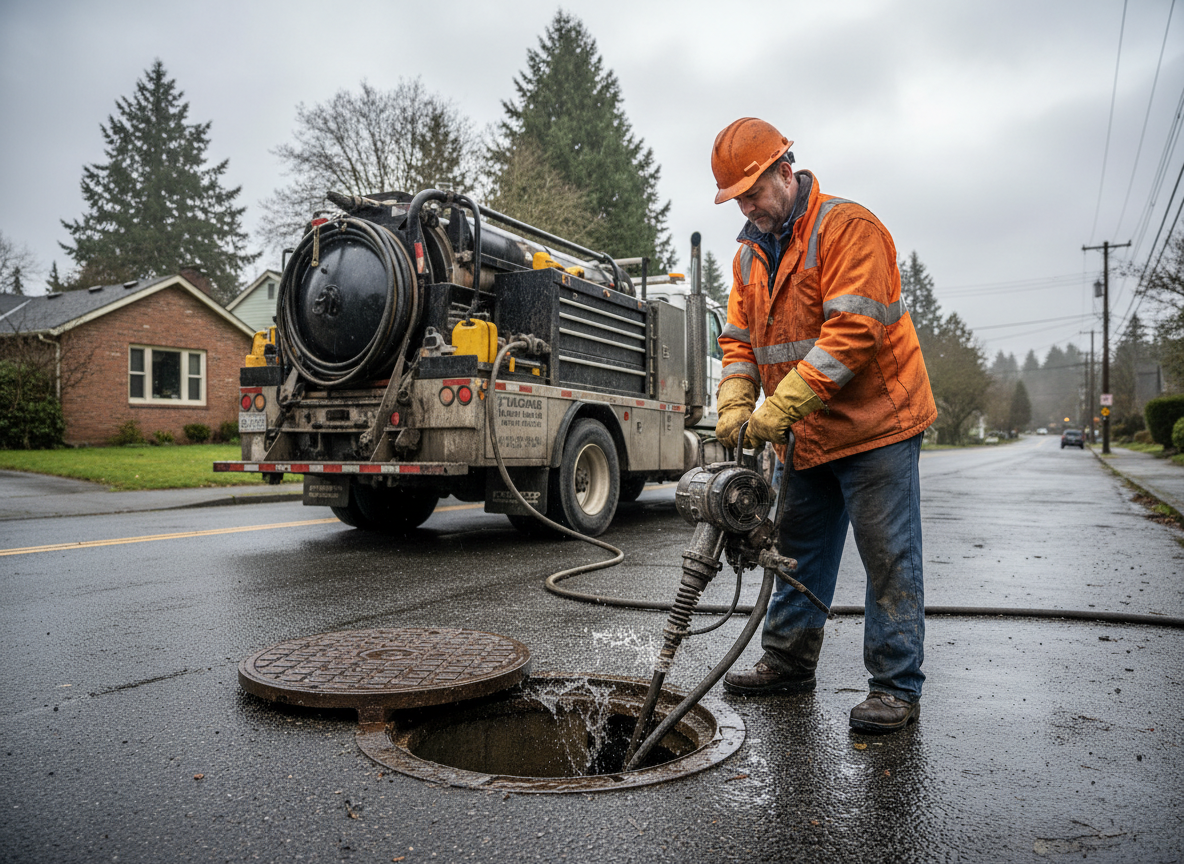
Tacoma's mild marine climate brings heavy winter rains that push sediment and debris into older sewer lines, especially in neighborhoods like the North End and Hilltop where many homes date to the early 1900s with clay or cast-iron pipes. These conditions turn small blockages into backups fast when tree roots from Point Defiance Park area properties or grease from local kitchens meet the wet season flow. Hydro jetting at 4,000 psi cuts through the buildup without chemicals that could harm Pierce County soil or stormwater systems.
In Eastside and Stadium District homes, narrow side sewers often run under sidewalks or through hilly terrain that shifts with freeze-thaw cycles, creating offset joints and recurring clogs. A standard camera inspection before jetting reveals these issues so the line is cleared fully rather than just opened temporarily. Nearby cities such as Lakewood and University Place share the same marine weather pattern, so the same root and sediment problems appear on service calls there.
Downtown Tacoma and Proctor District properties with mixed residential and commercial use see frequent grease and paper buildup from restaurants and apartments. Jetting reaches 300 feet from the 403 Broadway shop location, allowing same-day response for backups that surface after a storm. The work avoids excavation when possible, preserving landscaping around landmarks like the Chihuly Bridge of Glass area homes.
Technician insight
In Tacoma the thing that catches most people out with sewer drain cleaning is the combination of 1920s clay pipes and heavy winter rain that drives roots deeper every year, especially in North End and Hilltop yards near older maples. Homeowners often try a cheap auger first, which only pokes a hole and leaves the root mass to regrow faster once the rains hit.
Hilltop backup after December storm
A 1940s home on the Hilltop had slow drains after three days of rain. Camera showed roots and sediment 80 feet from the cleanout. Hydro jetting cleared the line to the main and restored flow without excavation.
Sewer Drain Cleaning Services We Offer
✓Hydro Jetting for Root Intrusion
High-pressure water clears tree roots that invade clay and concrete lines common in North End and West End yards.
✓Grease and Sludge Removal
Jetting breaks down kitchen grease and sludge that accumulate in older South End and Eastside sewer laterals during wet months.
✓Sediment and Scale Cleaning
Removes mineral scale and winter sediment from cast-iron pipes in Hilltop and Downtown Tacoma homes without pipe damage.
✓Main Line Hydro Jetting
Clears full sewer main blockages from the cleanout to the street connection in Pierce County properties.
✓Camera Inspection with Jetting
Combines video locating and hydro jetting to identify offsets or collapses before and after clearing in Stadium District homes.
Sewer Drain Cleaning Cost in Tacoma, WA
| Service | Typical Range | What Affects It |
|---|---|---|
| Standard hydro jetting | $350–$650 | Single family homes with accessible cleanout and moderate roots or grease. |
| Camera inspection add-on | $150–$250 | Required when offsets or collapses are suspected in older North End lines. |
| After-hours or weekend call | $150–$300 | Applies outside Mon–Fri 8am–6pm or Sat 9am–2pm. |
| Multi-unit or commercial line | $600–$1,200 | Longer runs or larger diameter pipes in Downtown or Stadium District buildings. |
Ranges are typical for Tacoma, WA and confirmed with an exact written quote before any work starts.
How it works
- 1
Site Assessment
Locate the cleanout and run a camera to map the line from the property to the main in the street.
- 2
Jetting Setup
Position the hydro jetter at the cleanout and select the correct nozzle for roots, grease, or scale.
- 3
Line Clearing
Run the jet head through the pipe at controlled pressure to cut and flush debris to the main.
- 4
Final Inspection
Re-camera the line to confirm flow is restored and note any structural issues for the owner.
Pricing
Most Tacoma sewer drain cleaning jobs fall between a few hundred and low four figures depending on access and buildup severity.