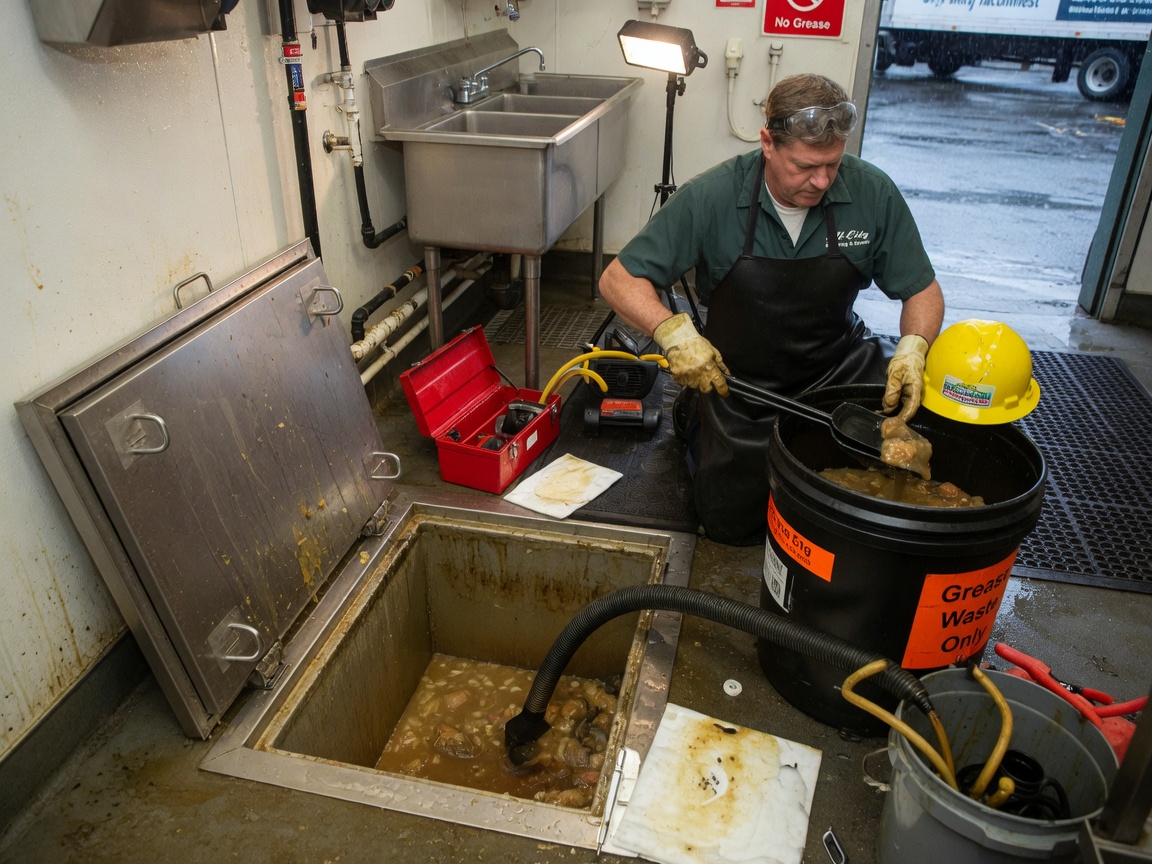
Tacoma’s mild marine climate brings frequent winter rain that cools kitchen wastewater quickly, causing grease to solidify in traps and downstream lines before it reaches the main sewer. Restaurants in Downtown Tacoma, the Stadium District, and near the Tacoma Dome often run older cast-iron laterals installed decades ago that narrow with scale and make even moderate grease buildup enough to trigger backups into floor drains. Preventive cleaning removes the FOG layer before it migrates, and crews typically follow Pierce County health department intervals that require pumping every four to eight weeks depending on volume.
Technicians arrive with vacuum trucks sized for under-counter 50-gallon units up to 2,000-gallon in-ground interceptors common at larger Eastside and South End establishments. After pumping, they scrape baffles and walls because residual grease left behind reseeds the next cycle within days. Lines from the trap to the street cleanout are then hydro jetted at 3,500–4,000 psi to clear any grease that has already coated the pipe wall, a step that becomes critical after wet winters when inflow and infiltration raise the water table and push softened grease further into the system.
Edge cases include multi-tenant buildings in the Proctor District where shared laterals mean one kitchen’s neglect affects neighbors, and University Place or Lakewood sites where newer PVC laterals still clog when high-volume fryers dump hot oil during peak dinner hours. Warning signs owners miss are slow sink recovery after lunch rush and faint odors near the trap lid, both of which precede a full backup into the dining area.
Skipping scheduled service forces emergency hydro jetting on weekends when the shop at 403 Broadway is only open until 2 pm Saturday, raising both cost and the chance of a health-department shutdown until the line is cleared.
Technician insight
In Tacoma the thing that catches most people out with preventive grease trap cleaning is how wet winters raise groundwater and push already-softened grease further into the old clay and cast-iron lines that still serve many Hilltop and Stadium District buildings, turning a missed quarterly pump into a full hydro jetting job that reaches the main in the street.
Stadium District restaurant backup
A sports-bar kitchen near the Tacoma Dome reported slow floor-drain recovery after a weekend of heavy rain. We found the 500-gallon interceptor half full of congealed grease that had migrated into the 1950s clay lateral. After pumping and scraping the trap we hydro jetted the line to the cleanout, restoring full flow before Monday lunch service.
Preventive Grease Trap Cleaning Services We Offer
✓Commercial Kitchen Grease Trap Pumping
Full vacuum removal of FOG and solids from under-counter and in-ground traps on a scheduled cycle to meet Pierce County requirements.
✓Baffle and Wall Scraping
Manual removal of baked-on grease from internal baffles and sidewalls that vacuum trucks alone cannot reach.
✓Downstream Hydro Jetting
High-pressure jetting of the line from the trap to the street cleanout to clear residual grease before it reaches Tacoma’s older mains.
✓Interceptor Inspection and Reporting
Camera inspection and written report documenting trap condition and remaining capacity for health-department records.
✓High-Volume Fryer Trap Service
Specialized pumping and jetting for interceptors serving multiple fryers at stadium-area and downtown restaurants with heavy oil output.
Preventive Grease Trap Cleaning Cost in Tacoma, WA
| Service | Typical Range | What Affects It |
|---|---|---|
| Under-counter trap pumping | $175–$275 | Most common size at small Tacoma restaurants; price rises with added jetting. |
| In-ground interceptor service | $350–$650 | Larger units near Tacoma Dome and Stadium District; access and volume affect final cost. |
| Add-on downstream jetting | $200–$400 | Required when grease has migrated past the trap in older Hilltop or Downtown laterals. |
| Emergency after-hours call | $450–$750 | Triggered when a backup reaches the dining room during wet winter months. |
Ranges are typical for Tacoma, WA and confirmed with an exact written quote before any work starts.
How it works
- 1
Site Assessment
Technician inspects trap location, measures current FOG level, and checks access for the vacuum truck in alleys or parking areas common in Hilltop and North End locations.
- 2
Pumping And Removal
Contents are vacuumed into the truck, with waste hauled to approved disposal facilities serving Pierce County.
- 3
Interior Cleaning
Baffles and walls are scraped, then the unit is rinsed before reinstalling the lid.
- 4
Line Jetting
The outlet line receives targeted hydro jetting to the property line cleanout to prevent downstream restrictions.
- 5
Documentation
Service report with photos and next recommended date is left for the operator and filed for county compliance.
Pricing
Pricing depends on trap size, access difficulty, and whether line jetting is required; call for an upfront quote based on your specific setup.